The Session That Made Me Build This Client Questionnaire
One time I was posing a family and I said, “Let's do some shots with just Mom and the kids.” Imagine my embarrassment when one of the kids then referred to the mom by her first name.
They were a blended family. I had no idea!
I replayed that moment all day. Nobody had told me, and I hadn't thought to ask. It was a small thing, but it was the kind of small thing that makes a client feel like you don't really see them. And I never wanted to feel that way at a session again.
That's the moment my client questionnaire for family sessions was born. When I first started mini sessions, I wasn't sending my clients a questionnaire at all. My sessions still went ok for the most part, but not as smoothly as they could have gone. I'd seen questionnaires used in the wedding industry, so I tried one for my portrait clients. It turned out to be hugely helpful!
A well-designed questionnaire changes the quality of every session I shoot. It tells me things clients wouldn't think to volunteer. It helps me serve each family as individuals instead of cookie-cutting every session. And it signals that I'm not just a photographer who shows up and clicks a shutter. I'm someone who pays attention.
If you want to see how the questionnaire fits into my broader communication system, I walk through all of it in my full client experience system.
A Questionnaire Is Decision-Making Information, Not a Booking Form
Here's what I see happen a lot. A photographer sends a questionnaire, gets a handful of answers back, files it away, and then shows up to the session flying blind anyway.
The questionnaire existed. The answers existed. But nothing changed about how they ran the session.
That's the gap that matters. A pre-session questionnaire for photographers isn't a form you send to check a box. It's decision-making information! Every answer should be doing something. It should shape how you sequence your shots, how you greet the kids when you arrive, and how you adapt your approach for the family in front of you.
The other version of this problem is the questionnaire that's basically an intake form. Name. Email. Number of kids. Session date. That's a booking form, not a questionnaire. It doesn't tell you a single useful thing about the family you're about to spend a session with.
For me, a real questionnaire does three things, and I think about all three every time I build mine.
It keeps me from foot-in-mouth moments. The blended-family story is exactly why. The right question surfaces context so I don't say the wrong thing in the middle of a session.
It helps me serve my clients better. Intentional questions let me adapt my approach rather than trying to cookie-cut each session and then realize halfway through that a different approach would have worked better.
It elevates the client experience. Not many portrait photographers send one, so it helps you stand out from the crowd! It only takes a client a few minutes to fill out, and it tells them you care about them as individuals before you've even met.
The Questions I Actually Send (And Why Each One Exists)
I have a specific set of questions I've refined over years of shooting. Here are the ones I lean on most, and why each one earns its spot.
Kids' Names and Ages
I ask for kids' names and ages right off the bat so I can use those names during the session! It helps build connection from the very first hello.
Ages also help me judge how to sequence things. A two-year-old and a nine-year-old in the same family need very different pacing, and knowing that ahead of time means I'm not figuring it out on the fly.
Whether They've Had Professional Photos Before
I ask if they've ever had professional photos taken before. A family that's done this a dozen times walks in differently than a family doing it for the very first time, and that tells me how much I'll need to coach them through the process.
How the Kids Usually Do With Sessions
I ask how the kids typically handle photo sessions. Are they usually excited, shy, or not into it at all?
If I know going in that a kid is really shy, I adapt how I interact when I first start so I don't overwhelm them. I give them a chance to ease in and warm up instead of coming at them the second I arrive. If a parent tells me their kid loves the camera, I can match that energy from the start. Either way, I'm not guessing.
Anything Special You'd Like Me to Know About Your Family
I also ask if there's anything special they'd like me to know about their family. This is the question that came straight out of that blended-family moment, and a blended family is exactly the kind of thing I'm hoping people will tell me.
I keep it open on purpose. Clients use it to share whatever context matters to them, and it's saved me from more than one awkward moment. None of it would have come up in normal pre-session chit-chat. But because I asked, it did.
How the Answers Change What I Do on Shoot Day
Those answers don't just sit in a folder. They change how I run the session.
And the biggest thing they change is how I work with kids who might be nervous. If I know a child is shy, I lean even harder on the way I already start every session.
I Always Start With the Whole Family Together
I don't front-load the hardest grouping. I start with the whole family together, every single time.
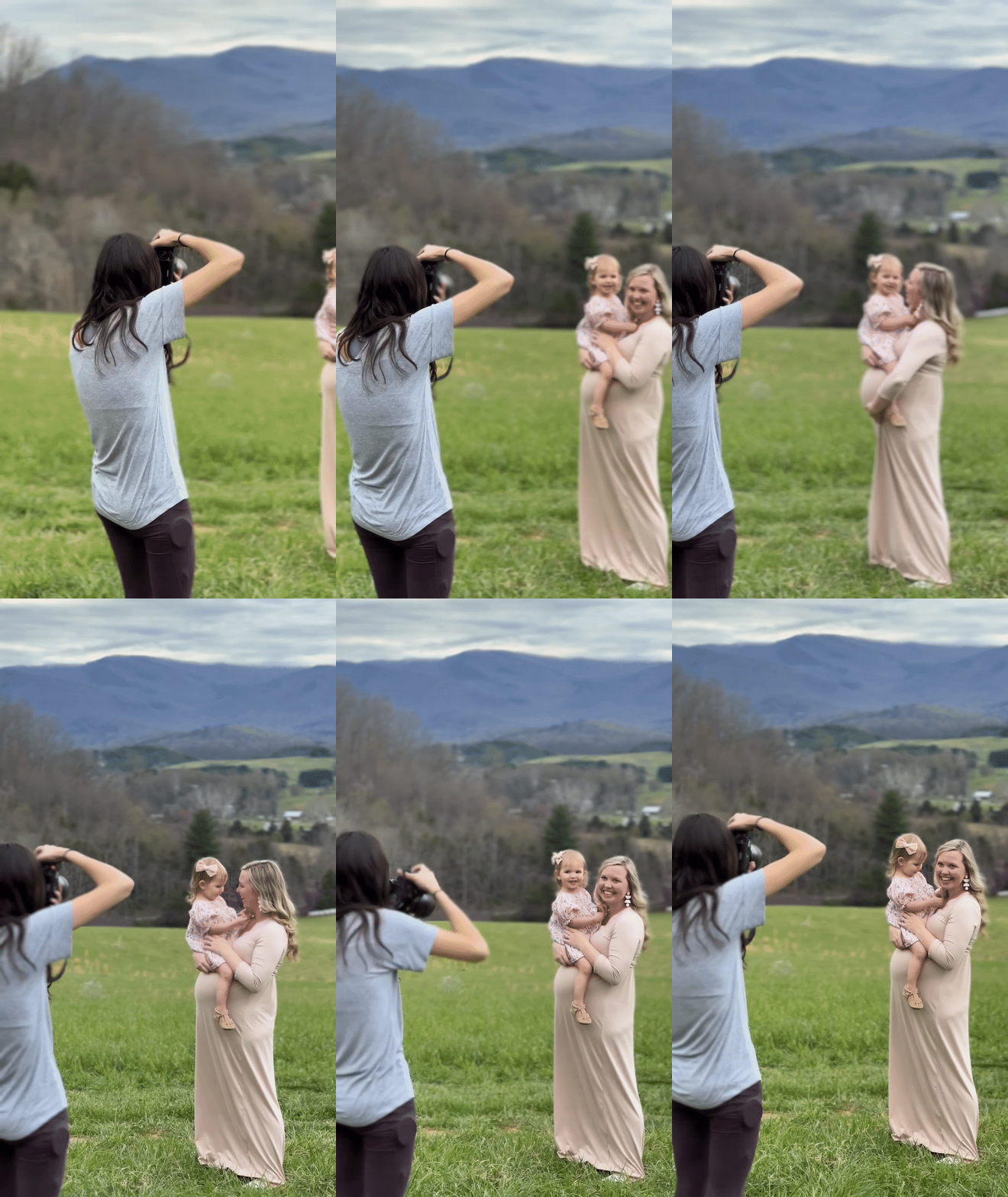
It helps just get everybody comfortable, especially if there's younger kids involved. They get to see, oh, this is okay. They watch how their older siblings or their parents are reacting to getting their photo taken, and they decide for themselves that the session is safe. THAT is what warms up a nervous kid, not me crouching down in their face the second I arrive.
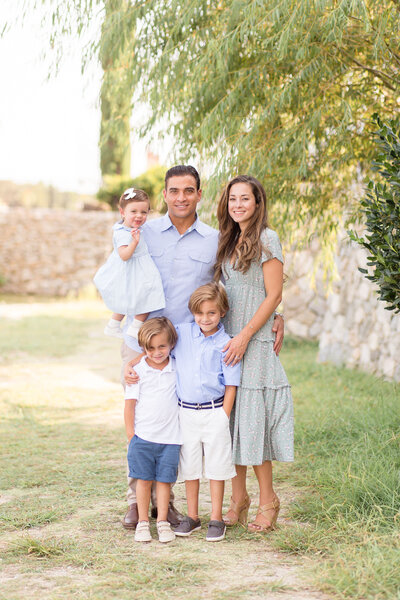
From there I keep moving people as little as possible. After the whole family, I do Mom and the kids, with Dad stepping behind me so the kids are looking toward the camera. Then Mom and Dad trade spots and I do Dad and the kids.
Only then, after everyone is loosened up, do I pull both parents behind me and do all the kids together. The all-siblings shot is one of the hardest groupings to get, which is exactly why I don't do it first. I do it once the kids already trust me and the whole family has warmed up.
After that comes each kid individually, the whole family again with fresh poses, and finally just Mom and Dad. I can't count how many times a couple has told me they haven't had photos of just the two of them since their wedding! Those end up being some of the most important images I take.
The One Time I Shoot Out of Order
There's a single exception to all of this, and it's a small one.
If a parent tells me their toddler typically doesn't follow directions well, I'll get that little one's individual shot earlier than I normally would. I know their attention span may not last to the end of the session, so I grab their solo shots while I still have them.
That's it. That's the only thing a questionnaire answer pushes me to shoot earlier, and it's one kid's individual shot, never the whole sibling group. With a mini session running just 15 minutes and only 5 images in the gallery, every minute matters, so knowing this in advance is the difference between getting that toddler's shot and missing it entirely.
The Questionnaire Is the First Email in My Whole System
The questionnaire isn't a one-off. It's the very first key email I send a mini session client, and it sets the tone for everything that follows.
I automate it through Dubsado, my CRM, so every client gets it about 2 weeks before their session without me lifting a finger. From there, the rest of my emails build on what the questionnaire started: a client experience guide with styling and location tips, a final info email with directions and timing, and a warm gallery delivery email at the end.
One questionnaire, sent at the right time, makes every one of those touchpoints land better.
If you want the exact Client Questionnaire I send my clients (ready to customize and drop into your own workflow), you can grab it in my shop!
When a Client Doesn't Fill It Out
Not every client fills out the questionnaire, and that's ok. You just want a simple plan for it.
My move is a quick, friendly follow-up. If it hasn't come back before our session, I send a short nudge with the link again. Not a guilt trip. Just, “Hey, I want to make sure I have your questionnaire before our session! Here's the link again if you need it.” Most of the time, people just forgot.
You're Building Trust Before You Ever Lift the Camera
Here's what I want you to take away from this, Friend.
Your questionnaire isn't a logistics form. It's the first real signal your client gets about what kind of photographer you are.
When a family receives a thoughtful set of questions before their session, something shifts. They feel like they're working with someone who is prepared, who thinks ahead, who cares about more than showing up and shooting. They start trusting you before you've even met in person. And that trust changes everything once you're actually together.
The questionnaire is also where you start making the images before you take a single photo. You already know whose toddler needs his solo shot early, which kid needs a minute to warm up, and what makes this particular family theirs.
That preparation doesn't happen by accident. It happens because you asked!
If you want a questionnaire that's already built out, refined, and ready to customize, mine is in the shop! It covers family sessions and minis, so you're not starting from scratch.
And if you want to see how a strong questionnaire connects to a full client experience system, this post on building an unforgettable client experience walks through how all of it fits together.
You're building something here! The questionnaire is just the beginning.
not sure where to begin?
here's a great place to start
Get practical business advice (did we mention, *free?*) every week to help you grow a thriving, profitable photography business! From behind-the-scenes editing tips, to posing and marketing - here are some of our most popular posts!

behind the lens
our *behind-the-scenes* membership program
Behind the Lens is our BRAND NEW MEMBERSHIP program geared towards family photographers! Each month our members receive a behind-the-scenes video of me shooting a REAL family session. As a bonus, I also include an EXCLUSIVE MASTERCLASS each month teaching on business topics I don't teach anywhere else! As our MOST AFFORDABLE, value-packed educational resource in our shop, it's a no-brainer for anyone looking to level up their family photography game! Join me every month behind the lens.
be my virtual shadow and learn while you watch me shoot real family sessions!
give me access!