
Prefer to listen? Catch this episode on the podcast:
There's a Canva tab open on your laptop right now. You've been fiddling with the same “Spring Minis: Limited Spots!” graphic, swapping the font, changing the background color, wondering why it still doesn't feel right.
Meanwhile, your gallery from last weekend's sessions is sitting right there, full of real families looking and smiling, and you haven't touched it for marketing at all.
Here's what I want you to hear: your best marketing asset is a photo you already took. You just haven't reached for it yet.
I'll be honest with you. I have a love-hate relationship with social media. I'm not naturally gifted at it, and I don't love it! So if you're staring at that Canva tab feeling stuck on how to market your photography business, you're in good company. Let's make this simpler.
Stop Reaching for the Canva Graphic
Most family photographers do the same thing when it's time to advertise minis. We open a design app, drop in our dates and pricing and all the details, and ask ourselves if it looks “professional enough.”
It feels like what marketing is supposed to look like. But those cutesy graphics that list the pictures, pricing, and dates? Stop using them.
There are two big reasons.
First, they make you look very salesy. People are so used to seeing these now that they're in the habit of just scrolling past anything that even looks like a pitch. A “Limited Spots Available!” graphic will not stop the scroll.
Second, it's giving too much information right up front. The mom scrolling sees your pricing, your dates, all the nitty-gritty details, and you haven't even had a chance to shake her hand yet. When you meet someone new, you don't dive right in with all the details. You introduce yourself first. You get to know each other.
Canva isn't the enemy here. The reflex is.
Use a Single, Stunning Image Instead
So what do you do instead? The most effective way to stop somebody's scroll is to use a single image that speaks for itself. Something that's just a stunning piece of your work. One image, no text on it.
I know it's tempting to slap the date or the type of minis right on there. Resist! Let the image do its job, which is to stop the scroll organically, and then let the caption do the rest.
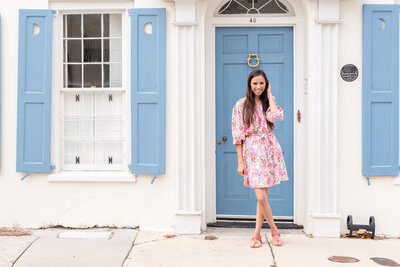
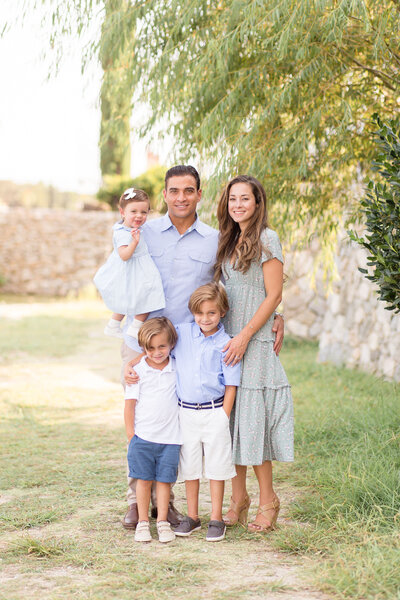
And here's the part that matters most: use an image with a REAL FAMILY in it.
If you're doing minis with a cute little setup, don't just post a picture of the setup. That's not enough to stop someone, and it's harder for a mom to picture herself there. When she sees a real family in your photo, she can imagine herself and her own kids in those shoes. She can relate to it.
One important note: you need to take that photo yourself. Please don't grab someone else's image, even “just for inspiration.” That's copyright infringement. Use a real family you photographed.
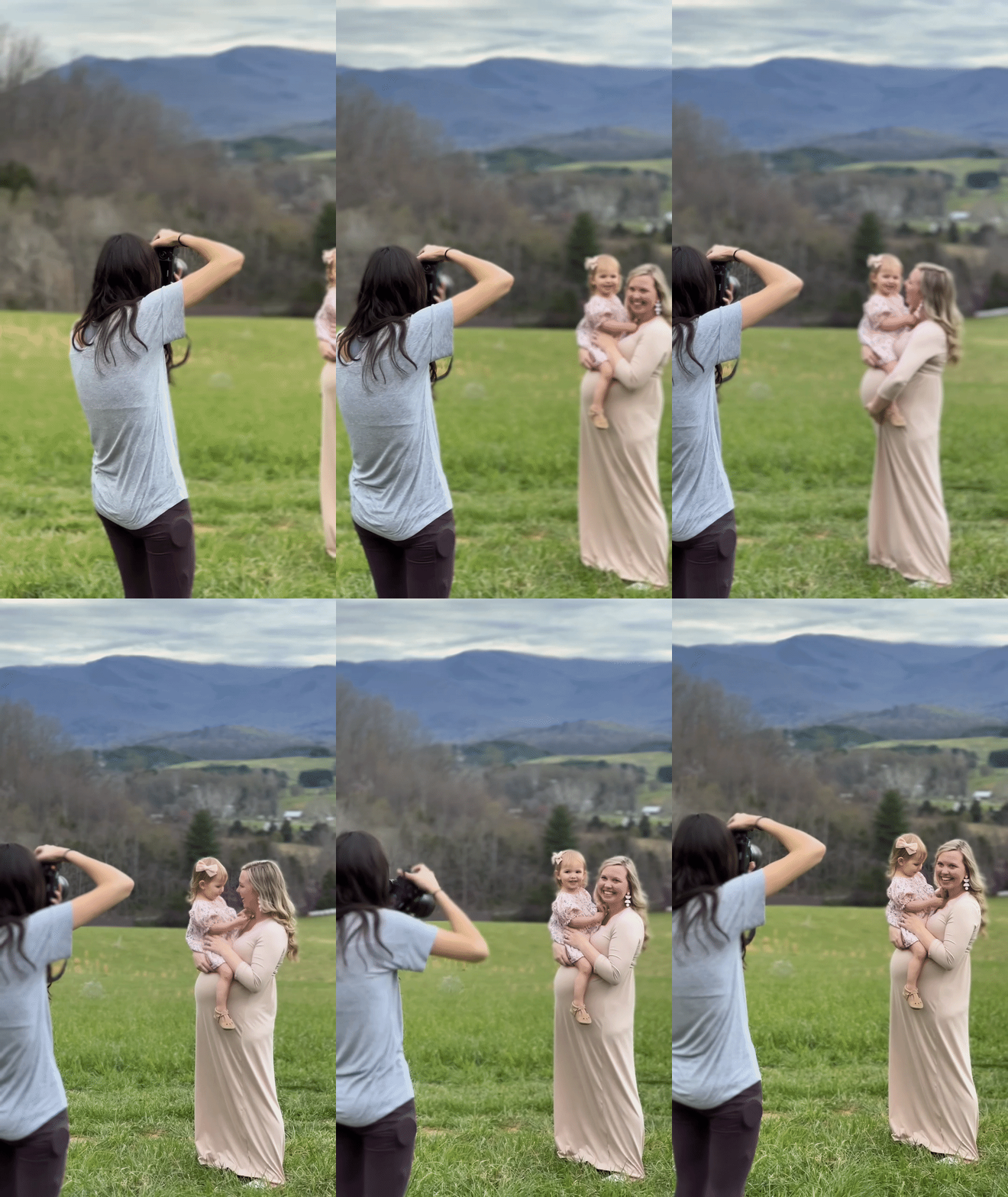
I like to use past clients for my promo and marketing shots, because it's a great way to bless my loyal clients with some free photos! And if you don't have past clients to pull from yet, you can always hold a model call.
Reach for the Money Shot
Not every photo in your gallery does equal work when it comes to booking sessions. So which one do you pull?
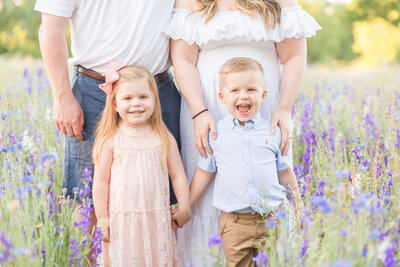
When I'm trying to book up mini sessions, the images that perform the best are the ones where the whole family is looking at the camera and smiling. I call that the money shot. That's the one where mom thinks, “Yes! We got it!”
Think about why a mom books fall minis. Most of the time the purpose is holiday cards. So what kind of image is she going to want? A picture of the whole family looking and smiling. She wants to know that you, the photographer, are capable of getting a shot with all four of her little kids looking at the camera at the same time.
Now, I LOVE a good candid! Throw those in too. They're a welcome addition. But if candids are all you showcase, mom is going to wonder whether you can actually get a photo of everybody looking and smiling. So when it comes to your advertisement, lead with the money shot, unless your entire style is candid and unposed.
(If you want a quick framework for turning your mini day into $3,000, I have a free blueprint for that too: www.rebeccaricephoto.com/3k-minis)
Let the Caption Do What the Photo Can't
So the photo stops the scroll. Now the caption goes to work.
So many photographers leave value on the table here. The default caption is something like, “This family was so sweet, I loved their spring session!” That's a cute saying, but it doesn't do much.
The purpose of the caption is to help your client. Use it to educate her, answer the questions she has, or hit the objections and reasons she hasn't booked yet. The caption is where you finally get to shake her hand. Give a little introduction, draw her in, give her a taste of your client experience and what sets you apart, and THEN give the details she's looking for: where it is, when it is, the type of minis, the pricing.
Think about what your clients actually ask. Session prep tips. What to wear. How to get the kids to cooperate. That's the kind of real value that belongs in your captions.
And here's a freeing little truth: your caption doesn't have to match your image. You can run a helpful FAQ caption over any beautiful photo from your gallery. (The one exception is a personal or intro post, which pairs better with a photo of you.)
Build a Simple Content Plan So You're Not Starting from Scratch
If posting feels endless, it's usually because there's no system underneath it. Here's the one I built for myself, since social media doesn't come naturally to me.
Start with a scheduler. My favorite is Plann (spelled P-L-A-N-N), because it auto-posts for me. Planoly works too, and if you want a free option, even a Trello board does the trick.
Then curate your feed first. Pull a bunch of images from recent sessions and make the grid look cohesive, because potential clients are looking at your feed as a whole, not just individual posts.
Decide how often to post. Instagram really rewards consistency, but consistency doesn't have to mean posting every single day! Consistency is whatever YOU decide it looks like, whether that's two, three, or five times a week. Pick a number you can actually stick to.
Then slot in the content you're already making, like your blogs and session sneak peeks, on their natural days. Decide on three to five content buckets, which are just topics you want to talk about consistently. Mine include client experience, frequently asked questions, and personal and family life. It doesn't all have to be about photography! People want to know the person behind the camera.
Then fill the gaps with those buckets. Personally, I'd rather batch everything, so I pick one day to be my social media day for the whole month and knock out the entire month of content at once. Then I don't have to think about it for the rest of the month!
Give Yourself Time, and Reach Past Your Own Followers
When you do open your minis, give yourself room to fill them. Whether you've got a massive client base or you're just starting out, I HIGHLY suggest giving yourself 4 to 6 weeks to advertise.
Start by advertising to your email list only. They're your VIPs, so they deserve some VIP perks! Then go public with the spots that are left, and keep marketing your minis at least once a week until every spot is filled.
One more thing to know: posting only to your own followers usually isn't enough. Only about 4% of your followers actually see any given post, thanks to the algorithm. So expand your reach with local Facebook groups, partnerships with local businesses, and Facebook ads. For more on that side of things, here's my post on advertising your mini sessions. And if you're not sure how far ahead to begin, I've written about exactly when to start advertising your mini sessions.
One last piece of good news: don't be afraid to repurpose your content. Only a small slice of your audience saw it the first time around, so you can reuse a great caption with a different photo weeks later and most people will be seeing it fresh.
You've Already Done the Hard Part
Marketing your photography business can feel like a never-ending project. But you didn't start from zero, Friend.
You went out with your camera and you made something real. You captured a family in a moment they'll look at for the rest of their lives. That already happened!
The marketing is just telling the story of what you made to the people who need to see it. You have the asset. Now go open that gallery instead of that Canva tab.
And if you want the heavy lifting done for you, the emails, the Facebook ad copy, the ready-to-go Instagram carousels and stories, that's exactly what's inside my Spring Minis Marketing Bundle. Grab it and let it handle the scaffolding so you can stay focused on the real photos that book the work.
P.S. If you're still figuring out how to get your minis fully booked in the first place, my free class walks you through the whole system from the beginning. Come grab a spot at rebeccaricephoto.com/minis-class.
not sure where to begin?
here's a great place to start
Get practical business advice (did we mention, *free?*) every week to help you grow a thriving, profitable photography business! From behind-the-scenes editing tips, to posing and marketing - here are some of our most popular posts!

behind the lens
our *behind-the-scenes* membership program
Behind the Lens is our BRAND NEW MEMBERSHIP program geared towards family photographers! Each month our members receive a behind-the-scenes video of me shooting a REAL family session. As a bonus, I also include an EXCLUSIVE MASTERCLASS each month teaching on business topics I don't teach anywhere else! As our MOST AFFORDABLE, value-packed educational resource in our shop, it's a no-brainer for anyone looking to level up their family photography game! Join me every month behind the lens.
be my virtual shadow and learn while you watch me shoot real family sessions!
give me access!